
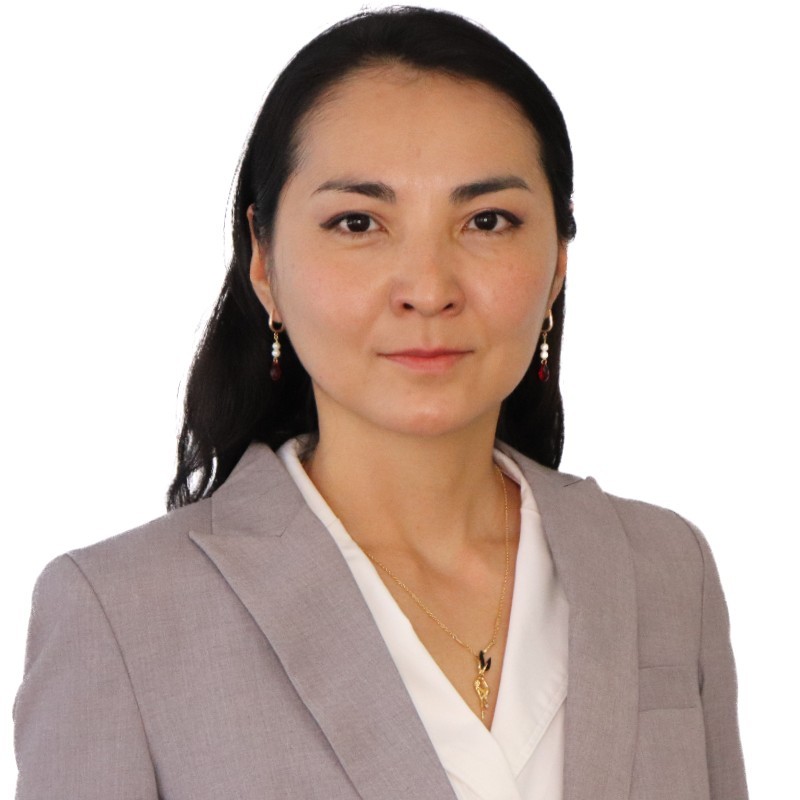
Before America
Dana Bukenova was born and raised in Almaty, Kazakhstan, and her career before the US was anything but a straight line. She graduated from the Kazakh State University of World Languages, meaning to teach English, and for a time worked as an English instructor at the Defense Institute, imagining a future serving her country as a military officer. Then an offer from Halyk Bank of Kazakhstan pulled her toward business, working as an assistant to the deputy chairman, and that job cracked open a world beyond languages and international relations.
She went back to university for a second degree, this time in finance, certain her career would be built in banking. She graduated straight into the 2008 financial crisis, when jobs were scarce, and ended up instead in marketing at Alem Communications, a telecom holding company that bundled smaller fiber-optic and cable TV operators serving Kazakh households. It was there she met her future husband, and together they spotted a gap in the market: universities and public spaces with almost no wireless internet coverage, in a country where 3G was brand new and 4G did not yet exist.
They built a company to serve that underserved student segment, raising capital, courting investors, and running an infrastructure-heavy business from the ground up. It grew into a real, scalable venture by the time they sold it to a strategic investor, a local telecom cable TV company, they had around 80,000 customers.
“You just wear lots of hats, you're a jack of all trades. You're being an entrepreneur, you're a hustler, basically.”
After the sale, Dana felt the specific exhaustion of five or six years spent as a generalist. She had built something real, but she had never gone deep in any one thing. She wanted, for the first time, to become an expert at something.
Arriving
What actually brought Dana to the US was her husband, who is American, born and raised near Washington, DC. Once they had exited the business and asked each other what came next, she said simply: let's go back to your hometown. They landed in Arlington, Virginia, close to Annapolis, Maryland: at first a place, she says, nothing like the version of America she'd absorbed from Hollywood movies.
She arrived with a resume that, outside Kazakhstan, meant almost nothing: her own startup and Alem Communications, names unknown beyond the region, next to Kazakh peers who at least had Beeline or a Big Four firm behind them. She was starting, functionally, from a clean slate, and she decided to treat that as an opening rather than a loss, a chance to choose a next decade instead of repeating the last one.
The hard middle
The adaptation was not smooth. Dana describes ten years ago as a strange, disorienting environment, one that forced her to rebuild her sense of who she was without the reference points: friends, relatives, a known name that had always told her. She arrived with deliberately low expectations, willing to accept almost anything, humble in a way she says only loosened over time as she let herself think more highly of her own abilities again.
“Actually when you immigrate somewhere you have to change a lot in your brain, and you have to change your perception of who you are when you are in a foreign environment.”
The isolation was real too, with no built-in support system, no family circle nearby to fall back on which made her lean hard into discipline: sleep, exercise, mental health, continually investing in her own skills even when no one was watching. It took nine years of quiet compounding before Bloomberg came calling.
“It feels a little bit isolated at times, and a lot of people go through this, but at the end of the day it will make you better, stronger.”
Where she is now
Dana joined Bloomberg in June 2022 as a product analytics manager the rough equivalent of a data scientist role after being referred by someone who wasn't even a close colleague, just a contact from a past project between two companies. The process took five months of waiting, interviews, some rejections along the way, and she deliberately kept her expectations near zero the entire time, treating it as practice rather than a sure thing.
“What got me there, I think one of the things that I keep reminding myself: relationships get you there. Your style, your good attitude, how you approach things, how you talk to people, how you communicate, those things make a good impression.”
Four years in, she has built exactly the kind of depth she came to the US looking for a defined expertise, in a company whose name means something everywhere, not just at home.
What's next
Dana wants to keep growing inside Bloomberg, but she's equally pulled toward giving back what she's learned. She's become more visible on Threads and Instagram, and much of the real work happens quietly in DMs, mentoring people who reach out one by one. She hasn't ruled out building something of her own again, either, though she's careful, still a little wary of the burnout her last venture left her with.
What she keeps coming back to, for herself and for anyone listening, is patience: the belief that the disconnected pieces of a hard decade do eventually resolve into something whole.